In an online meeting with approximately 230 participants from 43 countries, three international specialists presented the challenges posed by research within the field of solidarity service-learning, providing guidelines on how to overcome them. It took place during the workshop “How to Conduct Meaningful Research in Solidarity Service-Learning” organized by Uniservitate on Wednesday, 19th February.
The event was held in the framework of the second call for Small Research Grants (SRG) 2025-2026 by Uniservitate, which will distribute 70,000 euros among selected projects. The deadline is in March, and you can consult the terms and conditions in the Research section of our website.
During the meeting, six presentations aimed to assist those who are planning research projects in solidarity service-learning. Andrew Furco from the United States, Bojana Culum from Croatia and Daniela Gargantini from Argentina spoke about producing meaningful knowledge in service-learning today. All three experts are members of the Uniservitate Academic Sounding Board and served as jury members during the first call for Small Research Grants in 2022.

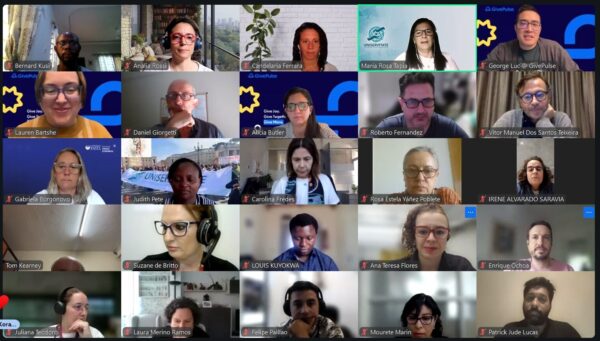
The webinar was moderated by SRG leaders Daniel Giorgetti and Ezequiel Gómez Caride.
Three of the research projects selected in that first call were presented in the second part of the webinar. Bonnie Amonge Crerar from Assam Don Bosco University (India) and Angela Nalwanga from Kisubi University (Uganda) described two perspectives regarding research on service-learning institutionalization. Following this, there was a reading of a research summary on the diaries of students engaged in service-learning experiences. It was prepared by Thierry Magnin, from the Catholic University of Lille (France), who was unable to attend.
Participants were also reminded that 72 projects from different continents were selected for the first edition and the central themes proposed for this year’s edition were revisited: the spiritual dimension of service-learning, the contribution to the identity and mission of Catholic higher education institutions, the institutionalization processes of service-learning; and the evidence of the contribution of service-learning to the students’ holistic education.
At the end of the meeting, Andrés Peregalli, the vice-coordinator of the Uniservitate programme, encouraged the participants to ‘plan sound research projects that provide mystic and evidence for a world in need of holistic education and knowledge that promotes this achievement.’