🥇Uniservitate Award 2024 winning experience
OVERVIEW
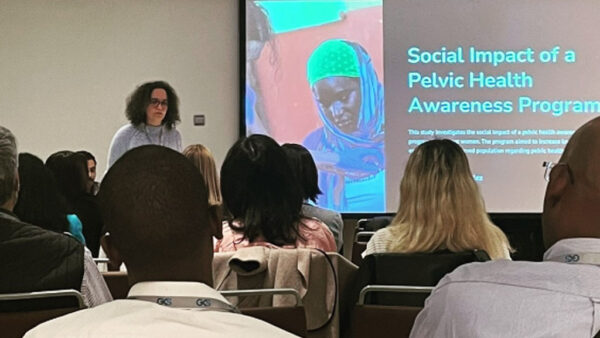
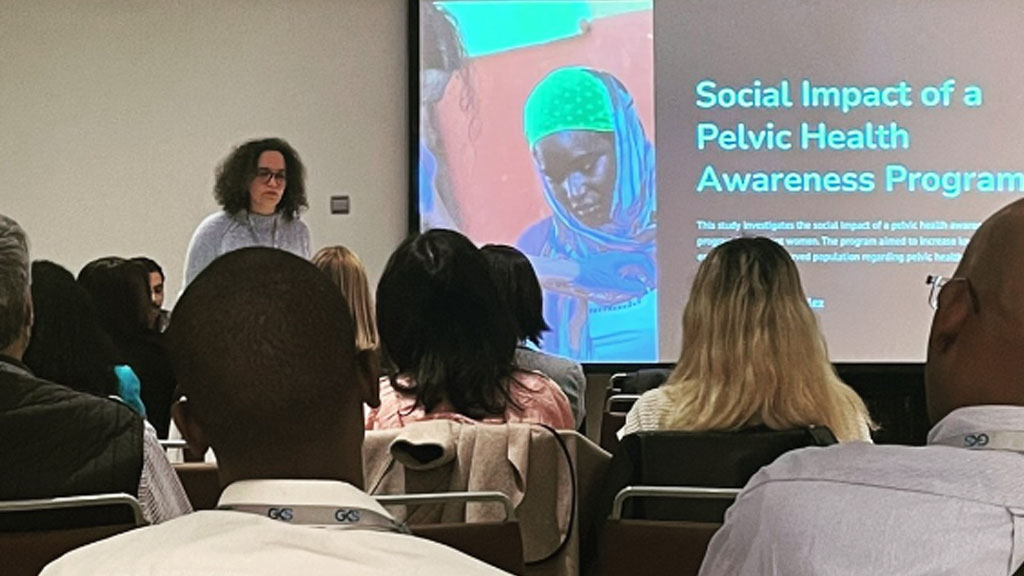
Physiotherapy undergraduates contribute to the design of the pelvic-health awareness programme, run workshops and collaborate in the development of educational content. They work in partnership with an NGO belonging to a leading referral hospital and local council’s centres for equality. In this context, the beneficiary community consists of migrant women who receive care by the “”Salud entre Mujeres”” [Health Among Women] programme, through the “”Salud Entre Culturas”” [Health among Cultures] initiative.
EXPERIENCE DEVELOPMENT
Dates:
From: 2023 (January)
Continues
Context. The social and community issue this initiative addresses is the lack of access to comprehensive and culturally-competent physiotherapy services for migrant women. This situation challenges their physical and mental health, remaining unaddressed and ultimately limiting their overall well-being and quality of life.
Objectives:
Solidarity action: To promote pelvic health awareness, including the prevention and treatment of pelvic floor dysfunction, to provide information and resources, and to empower migrant women by providing them with the knowledge and the means to manage their long-term care. Furthermore, the project aims to foster interdisciplinary collaboration and have a positive community effect, ultimately contributing to the comprehensive well-being of these women.
Learning:To enrich the educational experience of physiotherapy students and strengthen their skills to address the pelvic-health needs of the migrant communit.
Direct beneficiaries of the solidarity action: From girls to elderly women. Migrant women from diverse cultures and backgrounds globally, who bring to the region a variety of languages and socioeconomic realities. These women live in vulnerable contexts, facing limited access to medical care and healthcare services. The direct beneficiaries are 33 women and the indirect, 330 individuals.
Type of service: Mixed/hybrid form
Seventy-five students and 2 professors participate in the project.
Main activities carried out by students: Participation in the project’s design and production sessions, delivering workshops, and collaborating on the development and distribution of educational content.
Number of weekly hours that students dedicate to the project: 1 hour per week during the semester.
Mandatory nature: Optional for all students.
Results:
A. Students: Understanding community needs and expectations; collaboration and teamwork skills, and adaptation of course curricula to meet specific requirements; furthering pelvic-health awareness; presentation and teaching skills; communication skills practice, and group facilitation; educational content design skills; adaptation of digital tools for health education, and understanding the importance of accessibility and media diversity.
B. Community: There is evidence of a significant engagement by both the students and the benefitted community, from the initial stage to identify the needs through to entire project stages. The continuous interaction between the students and the migrant women contributed significantly to increased community awareness and knowledge of pelvic health dysfunction. It also contributes to empowerment, informed decision-making, and reinforcing community collaboration.
Audiovisual material and further information:
DATA SHEET
- Experience Title: SQUEEZE & LIFT – Impacto social de un programa de concienciación sobre la salud pélvica para mujeres migrantes [Social impact of a pelvic-health awareness programme for migrant women]
- Region: Southern Europe
- Country: Spain
- University: San Rafael University Centre
- Department involved: Physiotherapy
- SDG Theme:B. Good health and well-being (SDG 3, and GCE 1)
- Place of implementation: Centros de atención del programa “”Salud entreculturas”” (health care centre)
- Responsible for the experience:María de Cortés Simarro-González and Marta Benito-Mi