🥇Uniservitate Award 2024 winning experience
SUMMARY
The students carried out research on the problems caused by the lack of drinking water, which is considered the main form of exclusion, on an island with a mostly african-colombian population and particular cultural traits that cause serious problems of exclusion and invisibility. The residents and students developed architecture and urban planning proposals reflecting the community’s expectations and needs. The activities carried out provide an immersive and meaningful hands-on experience, while promoting community participation and empowering local residents in urban design and planning.
EXPERIENCE DEVELOPMENT
Dates:
From: 2021 (March)
Continues
Context: The limited and precarious access to water in Tierra Bomba significantly affects residents’ quality of life, resulting in exclusion and vulnerability. The Afro-descendant community of Tierra Bomba has historically faced difficulties due to inadequate water infrastructure, which limits daily consumption, basic hygiene, and everyday activities.
Objectives:
Solidarity action: To explore the issue of water; identify root causes; and to collaborate with various institutions and the media so that students can raise awareness of injustices in Tierra Bomba and facilitate concrete action.
Learning: To understand the social, economic, and environmental issues in marginalized communities; apply the theory learned in class to real-world situations, especially in architecture, urban planning, and community services; develop research skills, work in teams with people from different disciplines and backgrounds, develop greater awareness of cultural diversity and social inequalities, improve communication skills when interacting with community members; reflect on the ethics and social responsibility of professionals in decision-making that affects disadvantaged communities; and contribute to the design and implementation of practical and sustainable solutions to address the identified problems.
Direct beneficiaries of the solidarity action: From children to senior citizens. The community of Tierra Bomba, which is primarily of African descent, has faced historical exclusion, silencing, and vulnerability. It lacks basic infrastructure and development opportunities, contributing to its disadvantaged status and increasing its vulnerability to social exclusion and limited access to health and education services. The direct beneficiaries are 120 and the indirect, 3,200.
Type of service: exclusively in the field.
Forty-eight students and 7 professors participate in the project.
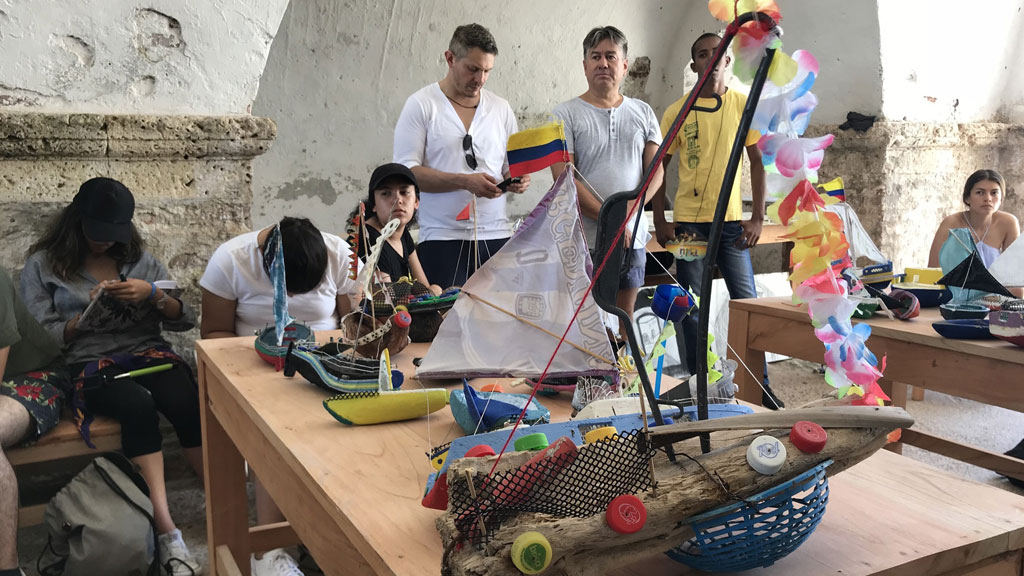
Main activities carried out by students: Theoretical and practical research, field studies to evaluate existing infrastructure and housing conditions, compilation of testimonials and documentation of the community’s specific needs. Online meetings with experts in architecture, urban planning, and community services. Implementation of practical solutions.
Number of weekly hours that students dedicate to the project: 40 hours during 1 week
Mandatory nature: It’s mandatory for some students but voluntary for others
Results:
A. Students: The key personal learnings and skill that students acquire in this project include: contextual understanding, critical thinking, creativity and innovation, empathy and cultural sensitivity, sustainability, and leadership and social responsibility. These knowledge and skills are relevant for their professional life in architecture and contribute to personal development and the education of citizens committed to social transformation and sustainable development.
B. Community: Some impactful changes and results in the community concerning the project objectives could include improved access to safe drinking water, better housing quality, and enhanced community resilience.
11. Audiovisual material and further information:
https://www.behance.net/gabrielad3 Tierra Bomba
DATA SHEET
- Experience Title: Revelando Realidades: La exclusión silenciada de la comunidad afrodescendiente en Tierra Bomba, Cartagena, Colombia [Revealing Realities: The Silenced Exclusion of the Afrodescendant Community in Tierra Bomba, Cartagena, Colombia]
- Region: Latin America and The Caribbean
- Country: Colombia
- Institution: Pontifical Xavierian University
- Department involved: School of Architecture
- SDG Theme: A. No poverty, zero hunger (SDG 1 and 2, and GCE 1).
- Place of implementation: Cartagena de Indias.
- Responsible for the experience: Carlos Alberto Hernández Correa and José Luis Bucheli Agualimpia.