Relatos del mundo (Stories from Around the World) is the title of a digital book that brings together eight short stories created by authors from different countries and languages and co-published by the Latin American Center for Service-Learning (CLAYSS) and the Catholic University of La Plata (UCALP). The volume, which was also produced by the National University of La Plata (UNLP), is available for free download from the Uniservitate repository and is an anthology of children’s stories that celebrates cultural diversity and the power of shared words.
The stories are presented in Spanish and English, and in some cases also in their original language—Dutch, Filipino, Luganda, or Polish—in both written and audio formats. The book was compiled by Isabel Tresca, from CLAYSS, and María de los Ángeles Wlasiuk, from UCALP, and is intended as an educational and cultural resource aimed at promoting values such as solidarity, encounter, respect for diversity and care for our Common Home.
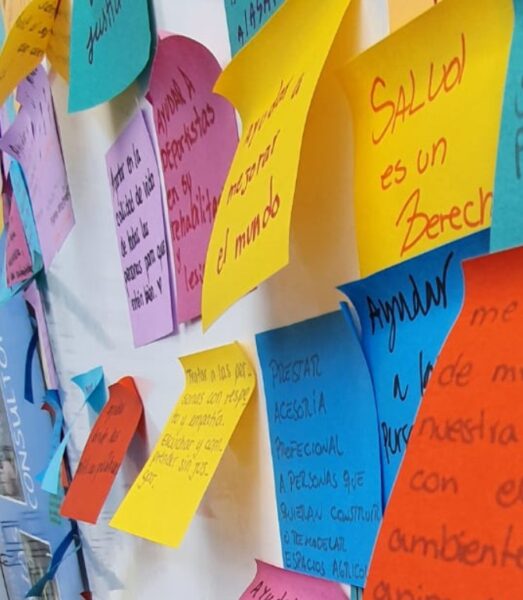
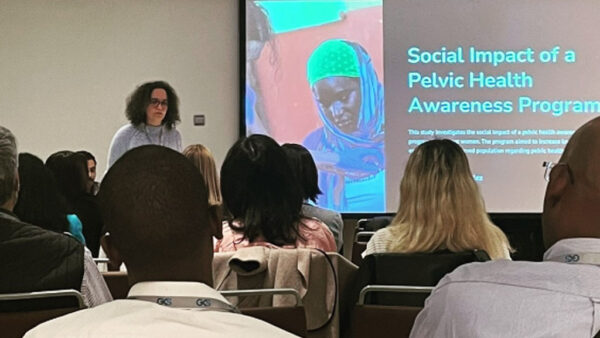
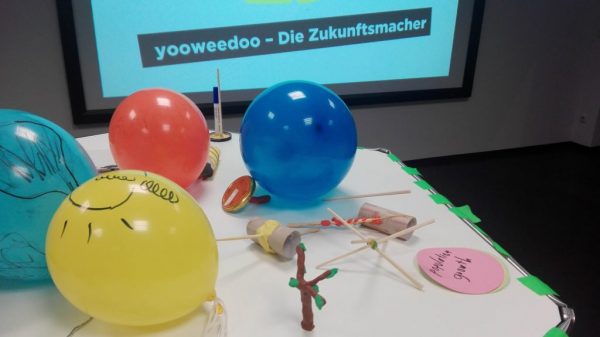
In the prologue, María Rosa Tapia and Andrés Peregalli, coordinator and vice coordinator of the Uniservitate Global Network, recall that the book arose from the desire to facilitate encounters between individuals and institutions that participated in the 21st International Service-Learning Week organised by CLAYSS in August 2024. As they explain, the initiative sought to ensure that the visit to UCALP’s Santa Clara de Asís Solidarity Service-Learning Centre was not a distant observation experience, but a true exchange of stories, gestures and dreams between people from different corners of the world. They thus allude to the genesis of the project: that international meeting that brought together representatives from universities in 17 countries in La Plata. There, participants were invited to contribute children’s stories in their native language, linked to fraternity and the values of learning-service solidarity. These stories were then illustrated by teachers and students from UCALP and UNLP, and read aloud to children and families in the neighbourhood where the Santa Clara de Asís Centre operates, while university students carried out service practices in health and nutrition. The book’s production process continued for several months with translation, editing, rights transfer and audio recording, until it became the book that is now a reality.
The stories and authors included are: The “Moon Extinguishers” of Mechelen, by Marie-An Knops (KU Leuven, Belgium); Lolita’s Tortillas, by Mónica Haydeé Ramos (DePaul University, United States–Mexico); The Tale of Mariang Makiling, by Romina Eloísa Abuan (De La Salle University, Philippines); The Story of Mr. Rooster, Mr. Cat, Mr. Dog, and Mr. Donkey, by Charles Senteza, Bernard Luwerekera, and John Baptist Kalama (University of Kisubi, Uganda); The Legend of Ansenuza Sea, by Daniela Gargantini (Catholic University of Córdoba, Argentina); The Lublin Billy Goat Teaches Children to Play Together, by Sylwia Maria Gwiazdowska Stanczak and Katarzyna Małgorzata Łogożna Wypych (The John Paul II Catholic University of Lublin, Poland); The Legend of the Waterfall, by the Uniservitate team; and A Group of Friends, by the Catholic University of La Plata, Argentina.
Each story is accompanied by illustrations created by professors and students from both universities. Professors from the Visual Language 3 course at the UNLP Faculty of Arts —Carlos Pinto, Yanina Hualde, Micaela Brest, Lucía Pinto and Taormina Lisboa— participated as ‘solidarity illustrators’, as did teachers and students from the Editorial Design course of the Bachelor’s Degree in Visual Design at UCALP —Licia Rizzardi, Josefina Ricci, and Florencia Cuadrado—. In addition, the texts have audio versions: the English readings were done by Romina Eloísa Abuan, and the Spanish versions were interpreted by teachers from UCALP secondary schools.
Relatos del mundo is presented as a testament to inter-institutional and global networking that brings together education, art and social commitment. In the words of its prologue writers, the book expresses the conviction that ‘we are made of stories’ and that recording them and making them accessible is a way of democratising culture and contributing to comprehensive education. Thus, this anthology is projected as a living material, open to continued growth and travel to new contexts, where stories continue to build bridges towards a more caring and humane world.