Country: Kenya
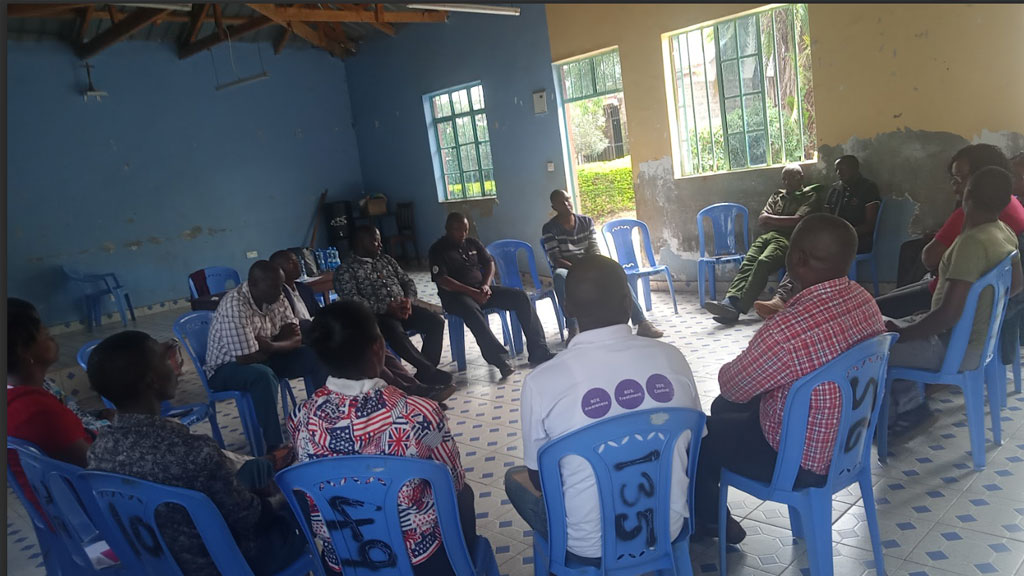
Project Name: Unlocking Prison Boundaries: Service-Learning Psychosocial Support to Prison Officers in Kenya
Students from (Degree, University): Psychology department, Tangaza University
GO TO THE EXPERIENCE
Country: Kenya
Project Name: Digital Innovative Skills Hub (DISH)
Students from (Degree, University): Education, Arts and Ciencias Sociales, Tangaza University
GO TO THE EXPERIENCE
Honourable mentions:
Hub: Africa
Country: Tanzania
Project Name: Never drop the microphone
Students from: Faculty of Science, Mweenge Catholic University
Course and person in charge: Master of Sciencie with Education. Buzinza Ndokeji
The aim was empowering youth toward self-determination (identifying and use their talents, abilities and potentials) so as to reach their goals and raise awareness on the alarming impacts of climate change. This included concerts, conferences, seminars, workshops and radio programmes, among other initiatives.
Learning objectives of the experience: Acquisition of technical and professional skills related to renewable energy technologies, sustainable agriculture, green building or environmental conservation. Improvement of social skills, such as communication, teamwork, leadership and project development.
Effect on students and community: Community awareness and participation, behaviour and lifestyle changes, community-based initiatives and innovations.
Hub: Africa
Country: Uganda
Project Name: Bulungi Bwansi Community Campaign
Students from: Business Studies. University of Kisubi
Course and person in charge: Business Administration and Management. Martín Luke Ssenyange Zziwa
Guidance and support to environmental conservation and protection initiatives.
Learning objectives of the experience: Students developed strategies to address community-based environmental problems, coordinated with stakeholders and engaged with community members and local leaders.
Effect on students and community: The activity encouraged and inspired community members to participate in the “Green Tree” service-learning campaign, while developing in the students a strong sense of environmental and community ethical responsibility. The trees planted under the Service Learning Tree Green Campaign significantly contributed towards the beautification of the University campus and are already making a positive impact on the environment, whereas the visit to the Bakateyamba Good Samaritan Home for the elderly cheered the residents in the spirit of solidarity.
Country: Australia
Project Name: Thomas More Law School (TMLS) pro bono legal service and education programme
Students from (Degree, University): Law School, Australian Catholic University
GO TO THE EXPERIENCE
Country: Philippines
Project Name: MAGKASAPI (MAGkasamang KAunlaran SA Pag-aaral at Paglalarong Intelektwal).
Students from (Degree, University): Business School, De La Salle University
GO TO THE EXPERIENCE
Honourable mentions:
Hub: Asia & Oceania
Country: Philippines
Project Name: Project BANYUHAY
Students from: Development Studies. Ateneo de Manila University.
Course and person in charge: Community Development and Social Change; SocSc 13: The Economy, Society, and Sustainable Development; and DEV 107: Project Management Mark Anthony Abenir
A Series of Capacity-building workshops to empower the UGNAYIN indigenous youth network digitally.
Learning objectives of the experience: The project improve the students’ digital storytelling and communication skills. They learned to combine traditional knowledge with modern platforms to promote social justice and environmental stewardship.
Effect on students and community: Students improved their skills in complex project management, critical thinking and strategic planning skills, essential for any future project manager or consultant. The project also played a key role in raising cultural awareness and understanding among indigenous and non-indigenous audiences.
Hub: Asia & Oceania
Country: Philippines
Project Name: KaTUWang Program
Students from: Psychology. University of San Agustín
Course and person in charge: Behavioral Sciences. Shella Marcela Villanueva and Ara Bella Nersoa Pielago.
Students immerse themselves in various high school teen centres within the Iloilo Province to conduct adolescent mental health programmes and advocacies as well as peer helper training and mentoring. “Katuwang” means partner in Filipino and “tuwa” translates as joy or happiness, something its organizers say refers to the type of engagement. It started in 2022.
Learning objectives of the experience: As reflected in their experiences and reflections, the students could appreciate the challenges that adolescents face in real life when it comes to their mental health, which are highly correlated to their own personal experiences.
Effect on students and community: Adolescents learned to cope with their mental health issues with the guidance of psychology students and other mental health experts who were invited to participate in the initiated activities.
Country: Poland
Project Name: Bacteria antibiotic resistance: a global challenge – local action
Students from (Degree, University): Chemistry, John Paul II Catholic University of Lublin, Poland
GO TO THE EXPERIENCE
Country: Germany
Project Name: Language promotion in primary school
Students from (Degree, University): Faculty of Languages and Literatures, Catholic University of Eichstätt-Ingolstadt
GO TO THE EXPERIENCE
Honourable mentions:
Hub: Central and Eastern Europe/ Middle East:
Country: Germany
Project Name: Awareness. Pastoral Care in the Festival and Events
Students from: School of Transformation and Sustainability. Catholic University Eichstätt-Ingolstadt
Course and person in charge: Simón Birkel
It focuses on integrating pastoral care at festivals seeking to provide discreet support to the young people attending the events, offering proximity and reassurance. Students interact with peers from varied social and cultural backgrounds. The accompanying research, including interviews, sheds light on important and pertinent developments within these spheres.
Learning objectives of the experience: Ability to recognize the complex mechanisms of event design in the youth sector Method: project planning and implementation, to observe and analyze the significance of celebration culture for the youth and school pastoral field and to apply youth ministry working methods and to present them in an aesthetically and addressee-orientated manner.
Effect on students and community: Personal and skills development for their professional and personal future, such as empathy and innovation, mindfulness, enthusiasm, trust and collaboration.
Hub: Central and Eastern Europe/ Middle East:
Country: Palestine
Project Name: Bridging the Local with the Global: Fostering Global Mindsets and Sustainability through Local Action and Community Engagement
Students from: Department of English and Communication. Bethlehem University.
Course and person in charge: Ramzi Asali and Rubba Ayyad
A new paradigm primarily focused on teaching English literature and linguistics courses, featuring a communication pathway aimed at enhancing students’ technical and social skills in interpersonal, organizational, and mass communication. The thematic focus of our service-learning pilot is “Global Citizenship, Sustainability, and Service Learning.” It starte in Spring 2023 and, due to the Gaza war, there was a transition to online learning.
Learning objectives of the experience: Equiping students with advocacys skills for promoting social change; effective communication for advocacy campaings; enhancing capacity building by partnering with local and international organizations, alongside students’ abilities as leaders and to work collaboratively; empowering Palestinian Youth drive positive social change. Conducting properly needs assessment; ability to plan and deliver effective training sessions; improved critical thinking and problem-solving skills; enhanced students’ soft and technical skills to capitalize on technology for social change.
Effect on students and community: A pre-post test study on field-based projects showed a positive change in raising awareness of the issues addressed in those projects, particularly concerning the SDGs. Focus group discussions involving a cross-section of beneficiaries reaffirmed the positive change. In digital campaigns, feedback and content analysis of comments showed a positive response to these campaigns.
Country: Colombia
Project Name: Revelando Realidades: La exclusión silenciada de la comunidad afrodescendiente en Tierra Bomba, Cartagena, Colombia. [Revealing Realities: The Silenced Exclusion of the Afrodescendant Community in Tierra Bomba, Cartagena, Colombia]
Students from (Degree, University): Architecture, Pontificia Universidad Javeriana.
GO TO THE EXPERIENCE
Country: Mexico
Project Name: Proyecto de Aplicación Profesional (PAP) ‘San Pedro Valencia’ [Professional Application Project (PAP) ‘San Pedro Valencia’]
Students from (Degree, University): ITESO (Western Institute of Technology and Higher Education), Universidad Jesuita de Guadalajara
Course and person in charge: PAP ‘San Pedro Valencia’. Héctor Morales Gil de la Torre
GO TO THE EXPERIENCE
Honourable mentions:
Hub: Latin America and The Caribbean
Country: Chile
Project Name: Proyecto Aprendizaje + Servico en el Internado Medicina Familiar [Service-Learning Project at the Family Medicine Internship]
Students from: School of Medicine. Pontifical Catholic University of Chile
Course and person in charge: Family Medicine Internship. Pamela Rojas González.
Each new group of students joining the course is responsible for conducting an SSL project carried out in any of the three Family Health Centres where the students do their internship in family medicine. The centres are located in the districts of Puente Alto and La Pintana. These are in low-income and highly vulnerable communities, with a registered population of more than 60,000 people distributed in the three centres.
Learning objectives of the experience: These activities provide students with additional skills to enhance their clinical training. Special emphasis is placed on: design and evaluation of research projects; clinical and administration management; critical analysis of the bibliography; design and implementation of educational strategies; and teamwork-related attitude and procedural skills.
Effect on students and community: The latest formal evaluation showed that 100% of the partners surveyed rated positively the work and products delivered, describing them as ‘good-quality projects’, ‘reliable products’ and ‘a real asset’.
Hub: Latin America and The Caribbean
Country: Colombia
Project Name: Apoyo técnico a Acueductos Comunitarios del Suroccidente colombiano [Technical Support to Community Aqueducts in the Southwest of Colombia]
Students from: Civil Engineering and Biology. Pontificia Universidad Javeriana Cali
Course and person in charge: César Camilo Cañón Barriga
Three case studies addressing community well-being and environmental sustainability in the regions of Cauca and the northern part of Valle del Cauca were addressed. The project presented integral solutions to optimize the aqueduct system of the Huasanó rural community, analysed the problems affecting the operation of a fish-farming programme promoted by a cooperative of demobilized combatants in the peace process between the FARC-EP and the Colombian Government in Silvia, Cauca, and supported the aqueduct of Restrepo.
Learning objectives of the experience: Students’ and professor Camilo Cañón’s accounts highlight that the project allowed them to apply theoretical knowledge to complex practical situations, developing key skills including design, planning, teamwork, contingency management, engineering approach, among other valuable professional competencies.
Effect on students and community: Regarding the social aspect, the initiative acquired a great relevance as it had a positive impact on vulnerable communities and contributed to consolidating regional peace. In some cases, the initiative became a viable economic alternative for demobilised families, reducing the risk of recidivism in the armed conflict.
Country: USA
Project Name: Uniting Heart Initiative
Students from (Degree, University): Faculty of Public Relations, Sacred Heart University (SHU)
GO TO THE EXPERIENCE
Country: USA
Project Name: Welcoming the Dear Neighbor
Students from (Degree, University): Office of Scholarly Engagement, Universidad St. Catherine.
GO TO THE EXPERIENCE
Honourable mentions:
Hub: The United States of America and Canada
Country: USA
Project Name: Essential Values of Diversity & Multiculturalism and Social Justice Program.
Students from: Mission and Ministry, Philosophy Emmanuel College
Course and person in charge: Catholic Social Teaching. Federico Cinocca
All students are required to complete four courses with an interdisciplinary approach. They visit experiences requiring attention and hospitality resources for people in different vulnerable situations (refugees, homeless people, people with no medical care, etc.) in their own city and other African countries to which they travel especially. In class, students reconsider their experiences in the light of interdisciplinary knowledge and the Social Doctrine of the Church.
Learning objectives of the experience: Students have a better understanding of the social, legal and economic determinants of injustice; they get to know and engage with social movements that advocate for change.
Effect on students and community: 79% of graduates in 2023 regard their experience with community service groups during their degree as having contributed ‘a great deal’ or ‘quite a lot’ to their education and personal growth. Many were motivated to develop their own social justice and service organizations or focus their careers on social justice.
Hub: The United States of America and Canada
Country: USA
Project Name: Health Equity Fellows
Students from: Fitz Center for Leadership in Community. University of Dayton
Course and person in charge: Moses Mbeseha
The programme provides health formation and outcomes from an equity lens, and explicitly centering its work on black and brown communities in Montgomery County, Ohio.
Learning objectives of the experience: Increase understanding of health equity and the structure upholding health and its social determinants.
Effect on students and community: As students move on to their professional lives, they are part of generating a sustainable, equity-minded health workforce.
Country: Belgium
Project Name: Surviving Memory in Postwar El Salvador
Students from (Degree, University): Faculty of architecturem, KU Leuven, Belgium
GO TO THE EXPERIENCE
Country: Belgium
Project Name: Anthropology of hospitality and migration politics/ Anthropology of communication and disability
Students from (Degree, University): Infomation and Communication and Political Sciences, Unamur (Université de Namur)
GO TO THE EXPERIENCE
Honourable mentions:
Hub: Western Europe North
Country: France
Project Name: Service Learning Law Bus
Students from: Law. Catholic University of Lille
Course and person in charge: Legal Clinic – Service Learning. Antoine Six and Caroline Delabre.
Two times per week, students specializing in Human Rights from the Law Faculty travel to Calais aboard the Law Bus to engage with migrants and offer legal assistance. This initiative is conducted in collaboration with lawyers and volunteers from the Cimade Association, who specialize in immigration law and procedures.
Learning objective of the experience: Academic knowledge of law has been reinforced by immersing students directly in real-world scenarios.
Effect on students and community: They honed their communication skills by interacting with clients from diverse backgrounds and effectively conveying legal information in a clear and understandable manner. Moreover, the students enhanced their teamwork and collaboration skills through their interactions with fellow volunteers.
Hub: Western Europe North
Country: Belgium
Project Name: Stronger networks, stronger clients and organizations, stronger (future) social educational care workers: everyone wins
Students from: University of Applied Sciences and Arts “Karel de Grote Hogeschool Antwerpen” (KdG)
Course and person in charge: Kathleen Van Loon and An Van Uytven
Course unit seeking to strengthen networking with clients and organizations.
Learning objectives of the experience: It is possible to get an overview on the subsystems around the client.
Country: Portugal
Project Name: Care(elder)ful
Students from (Degree, University): Social Services of the Faculty of Philosophy and Social Sciences, Universidade Católica Portuguesa
GO TO THE EXPERIENCE
Country: Spain
Project Name: SQUEEZE&LIF: Impacto social de un programa de concienciación sobre la salud pélvica para mujeres migrantes [Social impact of a pelvic-health awareness programme for migrant women]
Students from (Degree, University): Centro Universitario San Rafael
GO TO THE EXPERIENCE
Honourable mentions:
Hub: Western Europe South
Country: Italy
Project Name: Narrating development, weaving identity.
Students from: Education. Università Cattolica del Sacro Cuore
Course and person in charge: Moral Philosophy, Theory of the Person and the Community, Ethics of Relations in Economy. Alessandra Gerolín.
The experience consists in accompanying women, who live a state of fragility (mainly victims of slave trading) and who are now involved in a project of Caritas. Students help women to become aware of their human value and the value of their path of empowerment which aim is not just to learn a job and improve skills, but to flourish as human beings.
Learning objectives of the experience: Students learn reciprocity and mutuality: sharing time, knowledge and skills engenders an experience of gratuity and personal enrichment. They learn that growing is not enough, because human beings need to develop and to flourish and that economy is the practice of taking care of the household. This means to create or support a network of relationships within civil society.
Effect on students and community: Students had the opportunity not just to put in practice what they have learned during the courses, but to live with the women an experience of real development. Women told to the academic community the importance of being recognized by students for their value, which is more decisive than the wounds suffered.
Hub: Western Europe South
Country: Spain
Project Name: El aprendizaje-servicio en los grados de Educación Infantil y Educación Primaria: un compromiso entre la universidad y los agentes sociales [Service-learning in early childhood and primary education degrees: engagement between the university and social agents]
Students from: Primary Education. Centro Universitario Sagrada Familia
Course and person in charge: José Hidalgo Navarrete
Seeking inclusion, work focuses on students with specific educational support needs.
Learning objectives of the experience: Identification and plan to address educational situations affecting students with different abilities and different learning processes; Understanding the characteristics of these students as well as the nature of their motivational and social contexts. Encourage collaborative work as well as individual work and effort.
Effect on students and community: There have been improvements in academic, social and communication skills in the groups of students involved in the internships. A significant expansion of collaboration areas, a greater number of social agents involved and new projects have been identified.